machine learning
Events

Fair, Transparent, and Accountable AI: What is Legally Required, What is Ethically Desired, and What is Technically Feasible?
Western societies are marked by diverse and extensive biases and inequality that are unavoidably embedded in the data used to train machine learning. Algorithms trained on biased data will, without intervention, produce biased outcomes and increase the inequality experienced by historically disadvantaged groups.
To tackle this issue the EU commission recently published the Artificial Intelligence Act – the world’s first comprehensive framework to regulate AI. The new proposal has several provisions that require bias testing and monitoring. But is Europe ready for this task?
In this session I will examine several EU legal frameworks including data protection as well as non-discrimination law and demonstrate how despite best attempts they fail to protect us against the novel risks posed by AI. I will also explain how current technical fixes such as bias tests - which are often developed in the US - are not only insufficient to protect marginalised groups but also clash with the legal requirements in Europe.
I will then introduce some of the solutions I have developed to test for bias, explain black box decisions and to protect privacy that were implemented by tech companies such as Google, Amazon, Vodaphone and IBM and fed into public policy recommendations and legal frameworks around the world.
Prof. Dr. Sandra Wachter (Oxford Internet Institute, University of Oxford, GB)
Sandra Wachter is Professor of Technology and Regulation at the Oxford Internet Institute at the University of Oxford where she researches the legal and ethical implications of AI, Big Data, and robotics as well as Internet and platform regulation. Her current research focuses on profiling, inferential analytics, explainable AI, algorithmic bias, diversity, and fairness, as well as governmental surveillance, predictive policing, human rights online, and health tech and medical law.
At the OII, Professor Sandra Wachter leads and coordinates the Governance of Emerging Technologies (GET) Research Programme that investigates legal, ethical, and technical aspects of AI, machine learning, and other emerging technologies. [more]
Institutions
- UHH
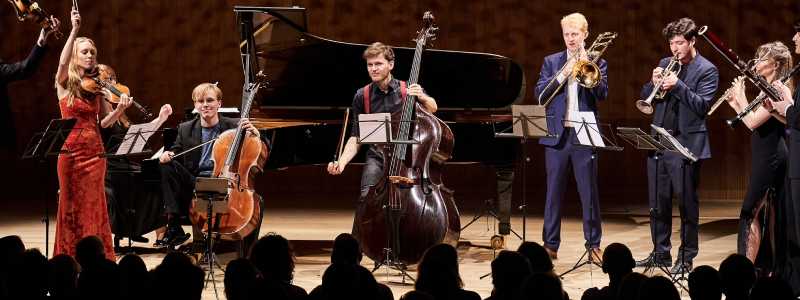
Fanny Mendelssohn Förderpreis –„Four Seasons - Man vs. Machine“
An diesem Abend werden sich die Fanny Mendelssohn Artists mit den Möglichkeiten der KI in der Musik auseinandersetzen unter der thematischen Überschrift Vier Jahreszeiten. Mit seinem Werk 4 Seasons for Hasty People stellt Mathias Rehfeldt die klassische Programmmusik auf den Kopf – und die Frage nach Kreativität in Zeiten künstlicher Intelligenz ins Zentrum.
Während Vivaldis berühmter Zyklus der Jahreszeiten rund 45 Minuten dauert, durchläuft Rehfeldt Frühling, Sommer, Herbst und Winter in nur wenigen Minuten – verdichtet, zugespitzt und mit einem Augenzwinkern an eine Gegenwart, in der alles immer schneller gehen muss.
Das Besondere: Das Werk steht im direkten Vergleich zu einer Komposition, die nicht von einem Menschen stammt, sondern von einer künstlichen Intelligenz. Beide Werke werden anonym vom selben Ensemble präsentiert – das Publikum hört und entscheidet: Wer ist Mensch? Wer ist Maschine?
Rehfeldt nutzt dieses Setting nicht nur für ein musikalisches Experiment, sondern für eine Auseinandersetzung mit der künstlerischen Realität der allerneuesten Gegenwart: Was ist Originalität? Was ist Emotion? Und wie verändert sich unser Bild von Kreativität, wenn Maschinen beginnen, Kunst zu produzieren?
Bereits seit 2015 zeichnet der Fanny Mendelssohn Förderpreis junge Klassik Künstler:innen aus – dabei bewertet der international renommierte Preis nicht nur die technische Virtuosität der Bewerber:innen, sondern legt besonderen Wert auf innovative Konzepte und visionäres Gestalten. Den jungen Talenten wird bei ihren musikalischen Projekten absoluter Freiraum gelassen. So zeigt auch das »Festival der Preisträger«, das nun bereits zum siebten Mal im Kleinen Saal der Elbphilharmonie stattfindet, die künstlerische Kreativität und das außerordentliche Talent der Fanny Mendelssohn Artists.
Institutions
- Elbphilharmonie
- Oscar und Vera-Ritter Stiftung
- Fanny Mendelssohn Förderpreis e.V.

First meeting of the Global Initiative on AI for Food Systems
The Global Initiative on AI for Food Systems (GI-AI4FS) brings together leading international organizations, International Telecommunication Union (ITU) , Food and Agriculture Organization of the United Nations (FAO), World Food Programme (WFP), and International Fund for Agricultural Development (IFAD) alongside a diverse global community of experts and innovators to shape the future of food through artificial intelligence. This open, collaborative platform invites participation from across disciplines, including AI/ML, digital agriculture, food systems science, and related fields.
The first Meeting of GI-AI4FS will be hosted in Rome by FAO on 18 June 2026. Participation is free, welcoming experts, institutions, and stakeholders committed to transforming food systems through responsible and impactful AI.
Institutions
- AI for Good
Generative AI and magical thinking
Recent advances in Generative AI have given rise to strong emotions among the general public, including excitement, fear, wonder, and disbelief. To be sure, the emergence of Large Language Models (LLMs) marks a significant milestone in the history of AI. But are systems like ChatGPT and Gemini actually intelligent, and are we at the threshold of so-called Artificial General Intelligence (AGI)? This session provides an overview of how LLM-based systems work, where they excel, and where they fall short, with a special emphasis on opportunities for the complementary strengths of humans and machines.
Session Objectives:
By the end of the session, participants will be able to:
- Explain the probabilistic nature of Large Language Models (LLMs) to demystify how they generate responses.
- Differentiate between the capabilities of current Generative AI and the “magical thinking” often associated with Artificial General Intelligence (AGI).
- Identify the operational limitations of AI systems to determine where human intervention and oversight are essential.
- Map complementary strengths of humans and machines to optimize collaboration in their own workflows.
Institutions
- AI for Good
Hands-on-Workshop: Research Data Management with Machine Training Support
Presentation: Prof. Dr. Ralf Möller, Institute of Humanities-Centered Artificial Intelligence (in English)
The presentation explains how research data within the Cluster of Excellence Understanding Written Artefacts (UWA) is managed and published via the University of Hamburg’s Research Data Repository (RDR). Researchers are encouraged not just to upload files but to present their data in ways that make it transparent, reusable, and compliant with FAIR (Findable, Accessible, Interoperable, Reusable) principles. A key tool in this work are CSMC files, archive packages similar to DOCX, which include project-specific views of the data. These CSMC files can be submitted to RDR, where they receive persistent identifiers (DOIs) and become accessible online. Examples from UWA projects illustrate how datasets appear in the repository with customized views rather than simple directory listings. A CSMC App also allows scholars to view and interact with their data locally, even without internet access. When a dataset is submitted, RDR automatically generates a “View Data” button so anyone can see the data presentation defined by the creators. Individual data records within these datasets can be cited directly using fragment identifiers in DOIs. The page highlights the importance of data persistence and versioning in making scholarly research reproducible and citable. Furthermore, we discuss research data from RDR and visualized as described above can be made available for fine-tuning generalized pretrained transformers to easier carry out humanities research tasks.
Hinweis: Diese Veranstaltung findet auf Englisch statt.
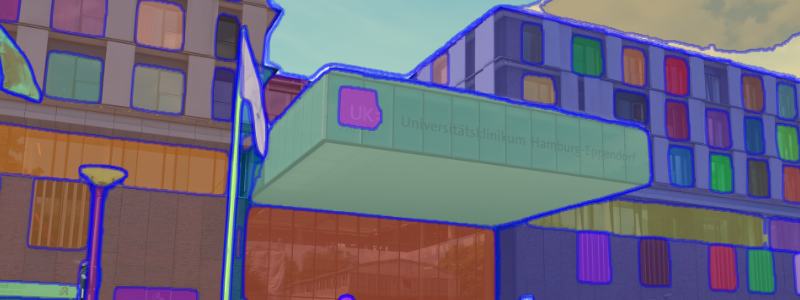
Image Computation and AI Workshop
Get to know other researchers working in Image computation and AI within UKE and at institutions around Hamburg.
Our workshop will consist of a mixture of elevator pitches and discussions with interesting formats to create dynamic participation. Please indicate if you are willing to give a short pitch (max 3 mins, 1 slide) of your research topic/interests.
We will have drinks and snacks throughout the afternoon and will end the workshop with pizza and drinks.
Registration: Please write to a.reinicke-vogt@uke.de by May 23rd with your name, email, research topic, and if you are willing to give a short (3 mins, 1 slide) elevator pitch of your research.

Inaugural lecture of MLE member Pierre-Alexandre Murena
The School of Electrical Engineering, Computer Science and Mathematics at the Hamburg University of Technology (TUHH) is pleased to share another inaugural lecture and research talk from the field of Data Science with the entire TUHH and with the public as part of its colloquium.
Program:
- Welcome
Prof. Dr.-Ing. Irina Smirnova, Vizepräsidentin Forschung, TUHH
Prof. Dr.-Ing. Gerhard Bauch, Studiendekan EIM, TUHH - Inaugural Lecture “From obeying AIs to collaborative agents: a human-centric view“
Dr. Pierre-Alexandre Murena, Human-Centric Machine Learning Institute, TUHH - Guest talk “Towards machines that understand people”
Dr. Andrew Howes, University of Exeter - Get together
Foyer, Building II, TUHH Campus
Online participation via Zoom is also possible. You will get the zoom link after registration
Institution
- TUHH
Incubator Summer Academy II - Data Science
Once again, the five platforms Helmholtz.AI, Helmholtz Imaging, HIFIS, HIDA and HMC have teamed up to createa second edition of the Incubator Summer Academy on 18-29 September 2023! We have designed a joint program with a variety course packages covering state of the art Data Science methods and skills, as well as networking opportunities in our Summer Academy Gathertown space!
Ranging from fundamental course packages as for instance “Python”, or “Introduction to Scienctific Metadata” to advanced topics as “Machine Learning Based Image analysis”, the program offers participants to select course packages that best suit their experience levels and interests.
The Incubator Summer Academy is open to all doctoral and postdoctoral researchers in the Helmholtz Association. Additionally, a small number of seats in our workshops are reserved for Master students, doctoral and postdoctoral students from other research institutions and universities.
More detailed information and registration: https://events.hifis.net
Introduction to Data analysis in R
Dr. Behnam Yousefi, Institute of medical systems biology, UKE
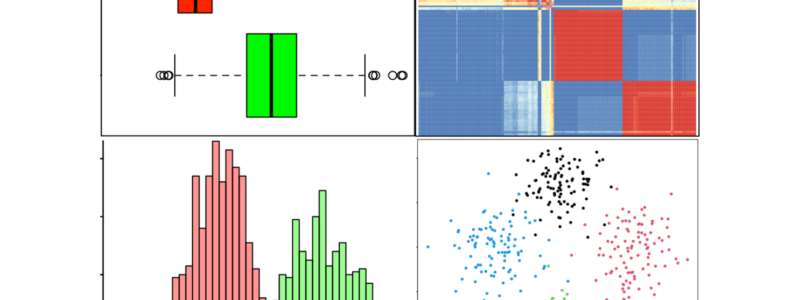
This workshop is for students, researchers, and clinicians keen to learn the R programming language and data analysis relevant to biomedicine. The course is designed to be practical and comprehensive with no specific background requirements. We will focus on fundamentals of data analysis with examples of real-life data in biomedicine, such as gene expression. By the end of the course, participants will be familiar with the essentials of data analysis, including statistical tests, linear regression, principal component analysis, clustering and data visualization. The workshop will be in presence and therefore each participant should bring their own laptop (no ipads).
Topics:
Basics of R programming language
Statistical tests
Linear regression
Principal component analysis (PCA)
Clustering
Data visualization
Introduction to Data analysis in R
Dr. Behnam Yousefi, Institute of medical systems biology, UKE
This workshop is for students, researchers, and clinicians keen to learn the R programming language and data analysis relevant to biomedicine. The course is designed to be practical and comprehensive with no specific background requirements. We will focus on fundamentals of data analysis with examples of real-life data in biomedicine, such as gene expression. By the end of the course, participants will be familiar with the essentials of data analysis, including statistical tests, linear regression, principal component analysis, clustering and data visualization. The workshop will be in presence and therefore each participant should bring their own laptop (no ipads).
Topics:
Basics of R programming language
Statistical tests
Linear regression
Principal component analysis (PCA)
Clustering
Data visualization
Introduction to Machine Learning in Python
Dr. Behnam Yousefi, Institute of medical systems biology, UKE
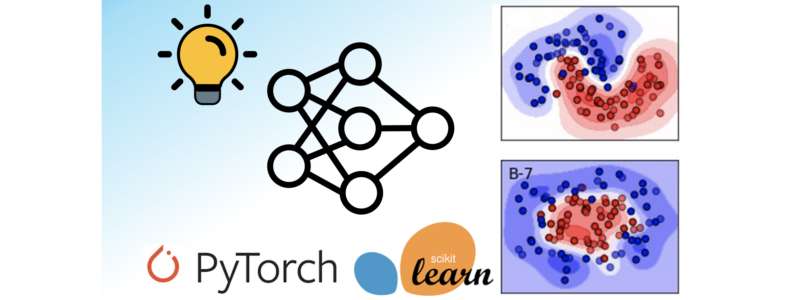
This workshop is open to students, researchers, and clinicians keen to learn the essentials of machine learning and implementing it via Python. The aim of the course is to provide a comprehensive map of machine learning (and deep learning) methods with no specific background requirements. A little background in python can be helpful, though. We will focus on fundamentals of machine learning, validation methods, linear and nonlinear models, and feature reduction. The students will also get familiarized with the Python packages of Sci-kit Learn and Pytorch. The workshop will be in presence and therefore each participant should bring their own laptop (no ipads).
Topics
Types of machine learning: supervised and unsupervised
Validation metrics and cross validation
Introduction to linear and nonlinear models include: Linear regression, Random forest, support vector machines, deep neural networks.
Feature reduction.
Regularization.
Introduction to Recurrent Neural Networks (RNNs) and their Applications
learn_bAIome offers workshops and trainings in biomedical AI/data science with tailored formats that take into account background, programming skills and intensity to provide unique, focused, and effective courses. These courses are free and open to students, clinicians, and researchers across academic institutions in Hamburg.
Lecturer: Dr. Fatemeh Hadäghi, Institute of Computational Neuroscience, UKE
Prerequisites A basic understanding of neural networks and machine learning concepts is expected as well as a familiarity with Python and basic programming skills.
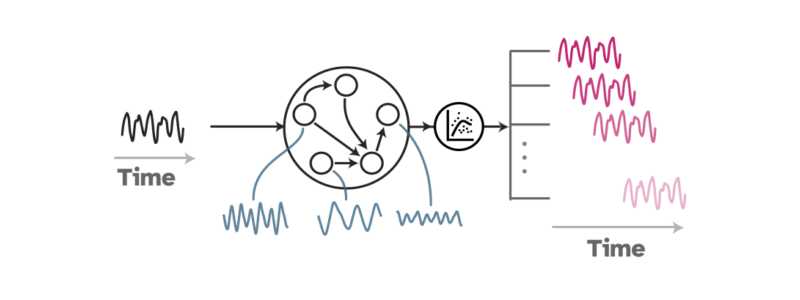
Description This workshop is open to students, researchers, and clinicians wanting to learn about recurrent neural networks (RNNs) and their applications in biomedical signal processing. RNNs are vital tools in the field of neural networks, especially known for their capability to manage sequential data. This workshop will provide an accessible introduction to RNNs, concentrating on their core concepts and various applications. We will explore how RNNs excel at capturing temporal dependencies through their unique recurrent connections, making them highly effective for a variety of tasks. Participants can expect to achieve a solid understanding of the basic principles and architecture of RNNs as well as the ability to identify suitable applications for RNNs and implement basic RNN models. The workshop will be in presence and therefore each participant should bring their own laptop (no ipads).
Topics
- Overview of RNN fundamentals and how they differ from other neural networks
- Key applications of RNNs in biomedical signal processing
- Reservoir computing (RC)
- Hands-on exercises and examples to illustrate RNN implementation and usage
Introduction to TESSERA: Time-series embeddings for geospatial analysis
Satellite remote sensing enables a wide range of downstream applications, including habitat mapping, carbon accounting, and strategies for conservation and sustainable land use. However, satellite time series are voluminous and often corrupted, making them challenging to use: the scientific community’s ability to extract actionable insights is often constrained by the scarcity of labelled training datasets and the computational burden of processing temporal data.
The presentation will introduce TESSERA (Time-series Embeddings of Surface Spectra for Earth Representation and Analysis), an open foundation model that preserves spectral-temporal signals in 128-dimensional latent representations at 10-meter resolution globally. The model uses self-supervised learning to summarise petabytes of Earth observation data. TESSERA is shown to be label-efficient and closely matches or outperforms state-of-the-art alternatives. By preserving temporal phenological signals that are typically lost in conventional approaches, TESSERA enables new insights into ecosystem dynamics, agricultural food systems, and environmental change detection. Moreover, the open-source implementation supports reproducibility and extensibility, while the privacy-preserving design allows researchers to maintain data sovereignty. To current knowledge, TESSERA is unprecedented in its ease of use, scale, and accuracy: no other foundation model provides analysis-ready outputs, is open, and delivers global, annual coverage at 10m resolution using only spectral-temporal features at pixel level.
This session is part of a two-session series, providing the theoretical introduction to TESSERA. The second session, a hands-on workshop, will be held on February 2nd, 2026.
Institutions
- AI for Good
KI und Wir
Die Veranstaltungsreihe beschäftigt sich in diesem Herbst unter dem Titel KI und Wir mit den rasanten und grundlegenden Veränderungen unserer Gesellschaft durch künstliche Intelligenz.
Vom 9. Oktober bis zum 14. November diskutieren Expert:innen aus Wissenschaft, Politik und Praxis mit dem Hamburger Publikum über das Potenzial von ChatGPT und Co. Wie können die neuen Technologien Medizin und Klimaschutz voranbringen oder auch in der Kunst genutzt werden? Wo kann KI beim Lernen in Schule, Hochschule und darüber hinaus unterstützen? Welche Regulierungen oder Transparenzvorschriften brauchen wir dabei? Um diese und andere Fragen geht es in vielfältigen Formaten von Podiumsdiskussionen über Ausstellungen bis hin zu interaktiven Workshops, die zum
Mitdiskutieren, Dazulernen und Ausprobieren einladen. Die Veranstaltungen finden u.a. an der Uni Hamburg statt. Viele UHH-Mitglieder tragen aktiv zum Programm bei.
Institutions
- UHH
- HIAS
- Körber Stiftung
Launch of 2026 ITU GeoAI Challenge: Reaching new heights with GeoFM embeddings
The International Telecommunication Union (ITU) is launching the fourth edition of the GeoAI Challenge, inviting students and professionals worldwide to tackle real‑world geospatial problems using artificial intelligence (AI) and machine learning (ML) to support advance solutions to solve global challenges.
This session introduces the challenge problem statement “Reaching new heights with GeoFM embeddings”, developed in cooperation with the European Space Agency (ESA) Φ‑lab Challenges, KTH Royal Institute of Technology, Politecnico di Milano, and the Group on Earth Observation (GEO).
The project represents an important first step toward building a global open dataset of Digital Surface Models (DSM), Digital Terrain Models (DTM), and ground‑cover categories derived solely from open satellite imagery. Participants will train models on selected regions and assess their ability to generalize across diverse geographical areas. Such datasets enable a wide range of SDG‑relevant applications.
For ITU, global geospatial datasets are essential to improve the accuracy of ITU‑R radio‑wave propagation prediction methods, which support spectrum sharing studies, radio‑interference assessment, and coverage estimation for point‑to‑area services such as mobile and broadcasting systems.
Institutions
- AI for Good
People
Hussein Mohammed

Johannes Lederer
Kay Grünewald
Institutions

Fraunhofer Center for Maritime Logistics and Services
Fraunhofer CML develops innovative solutions for the maritime sector and the maritime supply chain. We support companies and institutions from shipping, port management and logistics in initiating and implementing future-oriented technologies and processes.
Institute of Information Systems, Leuphana University Lüneburg
At the Institute of Information Systems (IIS) of the Leuphana University we work on innovative topics in Information Systems and Data Science.

Universität Hamburg
Adeline Scharfenberg