Invited professors and computational scientists from partner institutions contribute to a 10-day programme of 60+ hours of lectures and hands-on exercises, covering two main themes: climate modelling and modern scientific computing, which span over a variety of topics: here
high performance computing
Events
Wednesday, April 2th - 4th, 2025 | 08:30 - 16:30
3th collaboration workshop on Reinforcement Learning for Autonomous Accelerators (RL4AA) .
DASY
We are pleased to announce RL4AA'25, the third instalment of the workshop series organised by the Reinforcement Learning for Autonomous Accelerators (RL4AA) Collaboration. After two very successful workshops in 2023 and 2024 in Karlsruhe and Salzburg, we are excited to announce the next workshop for 2025. RL4AA'25 will be hosted by DESY in the beautiful port city of Hamburg, Germany.
The workshop will bring together experts from the fields of machine learning, accelerator physics, and high-performance computing to discuss the latest developments in the field of reinforcement learning for autonomous accelerators. The workshop will feature invited talks, contributed talks, and poster sessions, as well as a panel discussion on the future of autonomous accelerators.
RL4AA welcomes seasoned RL practitioners as well as newcomers. We are doing our best to make sure there is something for everyone, from introductory tutorials to advanced research talks.
Note also that this year’s workshop is organised in coordination with 5th ICFA Beam Dynamics Mini-Workshop on Machine Learning for Particle Accelerators (MaLAPA) workshop at CERN. Both workshops are organised such that you can attend them one after the other.
We are looking forward to welcoming you to Hamburg in 2025!
Institutions
Friday, October 16th, 2026 | 09:00–15:00 p.m.
Art Meets Climate Science and High-Performance Computing
DKRZ—German Climate Computing Center
Join us for an event exploring the intersection of art, science, and high-performance computing!
Starting out from climate simulations at DKRZ with their vast code and data repositories, artists, researchers, and developers will share their experiences of working across disciplines and present innovative approaches to collaboration between creative practice and scientific computing. The morning will feature breakout workshops, followed by a podium discussion in the afternoon.
The programme features contributions from Tomás Andrade Weber (Creative Intelligence Lab, Barcelona Supercomputing Center), Călin Segal (Computational Artist), and Silvina Caino-Lores (Inria Centre at the University of Rennes).
Discover how artistic practice can contribute to scientific discovery, technological innovation, and new ways of engaging with complex systems.
Registration is open — reserve your spot!
Institutions
Monday, July 28th - Thursday, August 7th, 2025 | several times
hpc4climate Summer School 2025
Welcome to the 2025 edition of the WarmWorld-ESiWACE3 Summer School, in the old town of Lauenburg near Hamburg!
The Summer School will give an insight into ICON , one of the state-of-the-art weather and climate science models. The students will learn basic meteorology concepts and will be invited to tackle code challenges using intermediate and advanced approaches from software engineering, high-performance computing and data analysis, all under the guidance of experienced lecturers from these various fields.
Important dates
- Apr 15, 2025 – Deadline for travel grants requests
- Apr 30, 2025 – Registration closes
- until May 15, 2025 – Notification of acceptance
- Jul 28 - Aug 7, 2025 – Summer School
Academic Programme:
Institutions
- IT Center for Science (CSC-IT)
- Deutsches Klimarechenzentrum (DKRZ)
- Deutscher Wetterdienst (DWD)
- Technical University of Munich (TUM)
- University of Cologne , Center for Earth System Observation and Computational Analysis (CESOC)
- Max Planck Institute for Meteorology (MPI-M)
Monday, May 04th, 2026 | 5:15 p.m.
Informatics colloquium: Analogical Proportions: Foundations and Applications in Artificial Intelligence
H2 (Hörsaal 2 / Lecture Hall 2) in the House of Informatics, Bundesstraße 56b
Prof. Dr. Özgür Özçep, Universität Hamburg, CHAI
Abstract:
Analogies and analogical reasoning are central topics at the intersection of various disciplines such as computer science (in particular AI), legal reasoning, cognitive science, psychology, and linguistics. This talk focuses on the model of analogical proportions understood as quaternary relations of the form a:b::c:d, read as “a is to b as c is to d.” After presenting recent general results on analogical proportions, the talk discusses their application to concrete instances in two subareas of AI: (1) mechanism design for fair resource allocation and (2) geometry-based knowledge graph embeddings.
Institution
- UHH
Tuesday, April 20th, 2026 | 5:15 p.m.
Informatics colloquium: Celebrity as a Service
H6 (Hörsaal 6 / Lecture Hall 6) in the Geomatikum, Bundesstraße 55
Prof. Dr. Alan Dennis from the Kelley School of Business at Indiana University, USA, will give a talk titled “Celebrity as a Service. An experiment examining the effects of using a highly human realistic AI agent that looks and sounds like a celebrity versus an unknown human for Public Service Announcements”.
Prof. Dr. Alan Dennis is a Distinguished Professor of Information Systems and holds the John T. Chambers Chair of Internet Systems in the Kelley School of Business at Indiana University. He was named a Fellow of the Association for Information Systems in 2012 and received the LEO award in 2021. His research focuses on three main themes: artificial intelligence, team collaboration, and fake news on social media. Professor Dennis has written more than 150 research papers, and has won numerous awards for his theoretical and applied research. He is ranked the second most published Information Systems researcher since we began keeping records in 1990, and a 2021 analysis of citation data placed him in the top 1% of the most influential researchers in the world, across all scientific disciplines. His research has been reported in the popular press almost 1000 times, including the Wall Street Journal, Forbes, CBS, Fox Business Network, as well as Canada’s CBC and CTV, and UK’s Daily Mail and the Telegraph. He is a past President of the Association for Information Systems, and also served as Vice President for Conferences.
Institution
- UHH
Tuesday, March 25th, 2025 | 14:15 p.m.
Informatics colloquium: Development of Compositionality through Interactive Learning of Language and Action of Robots Using Free Energy Principle
Konrad-Zuse-Hörsaal, Raum B201, Vogt-Kölln-Straße 30
Abstract
The focus of my research has been to investigate how cognitive agents can develop structural representation and functions via iterative interaction with the world, exercising agency and learning from resultant perceptual experience. For this purpose, my team has developed various models analogous to predictive coding and active inference frameworks based on the free energy principle. Those models have been used for conducting diverse robotics experiments which include goal-directed planning and replanning in a dynamic environment, social embodied interactions, development of the higher cognitive competency for meta-cognition. The current talk highlights a set of emergent phenomena which we observed in our recent robotics study focused on embodied language [1]. These findings could inform us how children can develop compositional linguistic competency only through limited amount of sensory-motor-language associative learning.
Bio
Jun Tani received the D.Eng. degree from Sophia University, Tokyo in 1995. He started his research career with Sony Computer Science Lab. in 1993. He became a PI in RIKEN Brain Science Institute in 2001. He became a tenured Professor at KAIST, South Korea in 2012. He is currently a full Professor at OIST. He is also a visiting professor of The Technical University of Munich. His current research interests include cognitive neuroscience, developmental psychology, phenomenology, complex adaptive systems, and robotics. He is an author of “Exploring Robotic Minds: Actions, Symbols, and Consciousness as Self-Organizing Dynamic Phenomena." published from Oxford Univ. Press in 2016.
Institution
- UHH

Monday, July 1st, 2026 | 17:15 - 18:45 p.m.
Informatics colloquium: Empowering People: Digital Work Between Innovation and Tensions
Bundesstraße 56b, Hörsaal 2
Prof. Dr. Julia Zeller-Lanzl, Universität Hamburg, DIT
Digital technologies are transforming the world of work at an unprecedented pace. They enable new forms of collaboration, create flexibility, and open up new possibilities for knowledge work and innovation. At the same time, many employees experience digital work as increasingly accelerated, boundaryless, and demanding.
These tensions have become particularly visible in recent years through two profound developments: the COVID-19 pandemic and the resulting shift toward hybrid work, as well as the rapid spread of (generative) AI. Both developments have rapidly changed where we work and how we work, communicate, and make decisions.
In my inaugural lecture, I explore how digital work can be designed in ways that allow people to benefit from it in the long term. It focuses on three perspectives: How can digital technologies meaningfully support people? How can digital work be designed in healthy and sustainable ways? And how can we prevent people from being excluded or left behind by digital transformation?
Drawing on current research and future research directions, I discuss why the future of digital work depends not only on technological innovation, but above all on how we design digital work in organizations and for people.
Institution
- UHH
Monday, July 6th, 2026 | 17:15 - 18:45 p.m.
Informatics colloquium: Fun with Venn diagrams
Bundesstraße 56b, Hörsaal 2
Prof. Dr. Torsten Mütze, Universität Kassel
Venn diagrams are a very popular and intuitive tool to illustrate relations between sets and operations on them. They are named after the English mathematician and philosopher John Venn, who introduced them as a graphical method to support logical reasoning. Most people, from their days in secondary school, still remember the Venn diagram for three sets represented by unit circles. It may even come to a surprise that Venn diagrams exist for any number of sets, not just three (though the shapes of the curves get more complicated than circles). These diagrams give rise to a number of challenging mathematical and computational research problems, which are also very visually appealing. I will give an overview of some of the research highlights on Venn diagrams from the past 40 years, including some of our own recent results, and I will mention some unsolved open problems.
The own results mentioned in the talk are based on joint work with Sofia Brenner, Petr Gregor, Linda Kleist, Christian Rieck and Francesco Verciani.
See you at the talk!
Institution
- UHH
Monday, May 19th, 2025 | 15:15 p.m.
Informatics colloquium: Opportunities, Limitations, and Challenges of Interactive Software Documentation
Konrad-Zuse-Hörsaal, Raum B201, Vogt-Kölln-Straße 30
Abstract
Producing good software documentation is a difficult balancing act: documents must contain enough information to address the needs of a large audience, but too much information can overwhelm individual readers. Creating interactive documents can mitigate this challenge by allowing readers to select the information they need. In this talk, I will present Casdoc, an interactive format for annotated code examples. With this project, we explored an alternative approach to present information that does not rely on a linear order of the content. Through two studies, we identified several patterns of information access from readers. I will discuss these patterns, which highlight the promises and perils when designing interactive documents.
Bio
I am a software engineering researcher focusing on the human aspects of the discipline, particularly the exchange of knowledge among different groups of developers, typically via documentation. In my research, I try to understand how developers access the information they need to learn about the software they use or contribute to, and how tools can make this information easier to create and to consume. I completed my PhD in 2024 at McGill University with Prof. Martin Robillard and I will soon start as a Lecturer (equiv. Assistant Professor) at the University of Canterbury.
Institutions
- UHH
Monday, July 13th, 2026 | 17:15 - 18:45 p.m.
Informatics colloquium: Talk: Prof. Dr. Linda Kleist
Bundesstraße 56b, Hörsaal 2
Monday, June 8th, 2026 | 17:15 - 18:45 p.m.
Informatics colloquium: Talk: Prof. Dr. Oliver Kopp
Bundesstraße 56b, Hörsaal 2
Monday, November 25th, 2024 | 17:15 p.m.
Informatikkolloquium: Consensus and its Variants
Informatikum, Room B-201, Vogt-Kölln-Straße 30
Abstract
Consensus and its variants, including set agreement and approximate agreement, play a central role in our understanding of asynchronous shared memory distributed computing. I will discuss some classical and recent results about these problems, including algorithms, hierarchies, impossibility results, and space complexity lower bounds.
Bio
Faith Ellen is a Professor of Computer Science at the University of Toronto and is currently serving as the Associate Chair, Graduate Students, in the Department of Computer Science. She received her Ph.D. from the University of California, Berkeley, in 1982. Her research interests span the theory of distributed computing, complexity theory and data structures. From 1997 to 2001, she was vice chair of SIGACT, the leading international society for theory of computation and, from 2006 to 2009, she was chair of the steering committee for PODC, the top international conference for theory of distributed computing. In 2014, she co-authoured the book, "Impossibility Results for Distributed Computing". Faith is a Fellow of the ACM.
Institution
- UHH
Monday, January 27th, 2025 | 17:15 p.m.
Informatikkolloquium: Measuring information processing in the brain
Informatikum, Konrad-Zuse-Hörsaal, Vogt-Kölln-Straße 30
Abstract
The brain is an information processing machine, and its function emerges from the ability of networks of neurons to process information. Yet, characterizing and measuring how neurons in the brain interact to process information has been challenging. Here I will present my computational work in developing analytical methods than can be applied to brain recordings during cognitive tasks. These methods allow us to infer how real neurons interact to encode information, transmit it downstream and generate behaviors such as perception and decision-making. They also allow us to understand differences between computations made by real neurons and computations made by machine-learning algorithms performing the same tasks.
Bio
Stefano Panzeri is a computational neuroscientist, researching at the interface between theory and experiment. His main research interest is understanding the principles of cortical information processing. He pursues this interest by developing new quantitative data analysis techniques based on the principles of Information Theory and machine learning and by developing computational models of neural network function. Stefano received a Laurea in Physics from the University of Torino, and a PhD in Computational Neuroscience from SISSA, Trieste, Italy. He has held personal research awards in both theoretical physics and computational neuroscience, including an INFN junior Fellowship in Theoretical Physics at Turin University, an EU Marie Curie postdoctoral Fellowship at the University of Oxford, and an MRC-funded Junior Group Leader position at the University of Newcastle. He has held tenured Faculty positions as assistant, associate and full professor at the Universities of Manchester and Glasgow. He has been visiting scientist at the Max Planck Institute for Biological Cybernetics and at Harvard Medical School for several years. He served as Coordinator of the Center for Neuroscience and Cognitive Systems of IIT. He also served as Deputy Chair of the UK Medical Research Council Panel for fellowships in Bioinformatics and Neuroinformatics. He currently works as Full Professor and Director of the Institute for Neural Information Processing at University Medical Center Hamburg-Eppendorf (UKE), Hamburg, Germany.
Institution
- UHH
Thursday, May 30th, 2024 | 15:15 p.m.
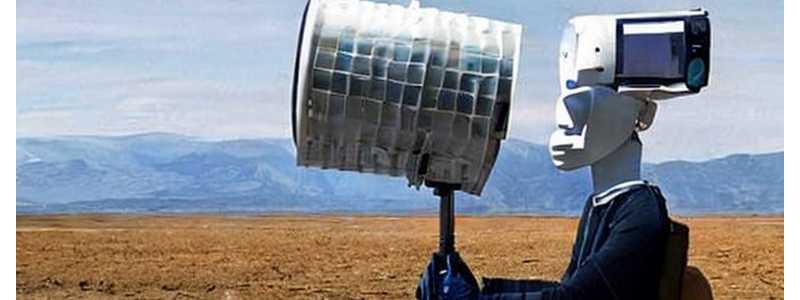
KlimaCampus Colloquium: The technology deleting photobombs can do climate research? The chat bot writing poems can do climate analysis?
Bundesstrasse 53, room 022/23 ground floor
Climate change research today relies on climate information from the past. Historical climate records of temperature observations form global gridded datasets that are examined, for example, in IPCC reports. However, the datasets combining measurement records are sparse in the past. Even today, they contain missing values. We found that recently successful image inpainting technologies, such as those found on smartphones to get rid of unwanted objects or people in photos, are useful here. The derived AI networks are able to reconstruct artificially cropped versions in the grid space for any given month using the missing values observation mask. So herewith we have found with AI a technique that gives us data from the past that we never measured with instruments. Other important datasets used in the Assessment Report 6 of the IPCC to study climate change, as well as advanced applications such as downscaling in atmosphere and ocean, a hybrid (AI&ESM) data assimilation approach within ICON, or precipitation in broken radar fields are shown in this presentation.
Climate research, including the study mentioned in the previous paragraph, often requires substantial technical expertise. This involves managing data standards, various file formats, software engineering, and high-performance computing. Translating scientific questions into code that can answer them demands significant effort. The question is, why? Data analysis platforms like Freva (Kadow et al. 2021, e.g., gems.dkrz.de) aim to enhance user convenience, yet programming expertise is still required. In this context, we introduce a large language model setup and chat bot interface based on GPT-4/ChatGPT, which enables climate analysis without technical obstacles, including language barriers. This approach is tailored to the needs of the broader climate community, which deals with massive data sets from kilometer-scale modeling and requires a processing environment utilizing modern technologies, but addressing society after all - such as those in the Earth Virtualization Engines (EVE eve4climate.org).
Kadow, C., Hall, D.M. & Ulbrich, U. Artificial intelligence reconstructs missing climate information. Nat. Geosci. 13, 408-413 (2020)
Institution
- The Center for Earth System Research and Sustainability (CEN)
- The Cluster of Excellence CLICCS
People
Christopher Kadow
Head of Data Analysis Department, DKRZ
kadow@dkrz.de
Institutions
Hans Fangohr
Head of Group, MPSD
Professor of Computational Modelling
hans.fangohr@mpsd.mpg.de
Institutions
Data Science in Hamburg | Helmholtz Graduate School for the Structure of Matter, DESY & UHH & TUHH & HSU & HAW & Hereon & HZI & MPSD & EuXFEL
Helmholtz graduate school educating the next generation of international and interdisciplinary data scientists
DESY
DESY is one of the world’s leading accelerator centres.

German Climate Computing Center (DKRZ)
The High Performance Computing Center for the Climate Community in Germany
People

Max Planck Institute for the Structure and Dynamics of Matter
Scientific Support Unit researching the use of computation to accelerate and support research.
People

Universität Hamburg
Adeline Scharfenberg