law
Events
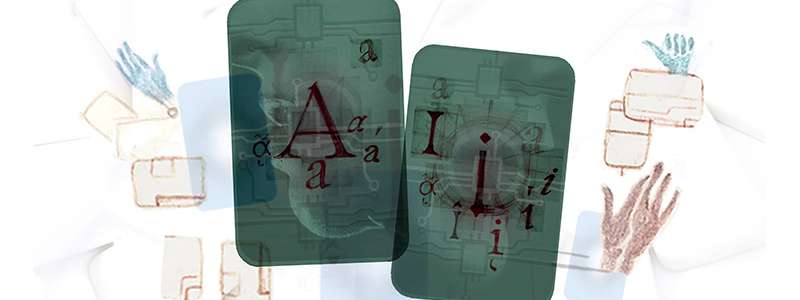
Public Lecture Series: Taming the Machines. tbd
Prof. Dr. David M. Berry, School of Media: Arts and Humanities, University of Sussex, UK
This semester, the Taming the Machines lecture series explores the sites and settings of digital transformations, addressing the foundations of AI, the entanglement of technology and science, as well as implications for our access to the world and to ourselves. It ranges from a furthered examination of algorithms and their societal effects to the manifold faces of digital capitalism and a critical theory of this digital constellation.
To get the latest updates and details how to attend the lectures, please visit http://uhh.de/inf-eit
- UHH
Public Lecture Series: Taming the Machines. The Future of Prediction. Algorithmic Forecast in Science and Society
This lecture series invites viewpoints from different relevant disciplines to explore how we can preserve and advance human values through the development and use of AI technologies. Key questions include: How does AI impact our fundamental social, political, and economic structures? What does it mean to lead a meaningful life in the AI age? What design and regulatory decisions should we make to ensure digital transformations are fair and sustainable?
Speaker: Prof. Dr. Elena Esposito, Universität Bielefeld, DE
Institutions
- UHH
Public Lecture Series: Taming the Machines. The Influence of AI on Democracy
Prof. Dr. Tilo Wesche, Carl von Ossietzky Universität Oldenburg, DE
Artificial intelligence is rapidly becoming a structuring force in contemporary life. From scientific research and public administration to everyday communication and self-understanding, AI systems shape how we act, decide, and relate to one another. Yet their rapid diffusion raises urgent philosophical and political questions: What kind of progress does AI promise and for whom? How do algorithmic systems transform responsibility, agency, and justice? Who is likely to suffer from the watchful eye of AI systems? Can democratic societies meaningfully govern technologies that increasingly govern them?
This semester of Taming the Machines explores these questions from interdisciplinary perspectives in philosophy, political theory, and science and technology studies. We invite you to reflect with us on AI as a site of power and normativity, and examine its role in economic and political ordering, surveillance and security, knowledge production, and the formation of subjectivity. And also to considers more intimate dimensions, such has how interactions with such systems might reshape self-knowledge, dialogue, creativity, and even solitude.
Institutions- UHH
Public Lecture Series: Taming the Machines. The Influence of AI on Democracy
Prof. Dr. Tilo Wesche, Institut für Philosophie, Carl von Ossietzky Universität Oldenburg, DE
This semester, the Taming the Machines lecture series explores the sites and settings of digital transformations, addressing the foundations of AI, the entanglement of technology and science, as well as implications for our access to the world and to ourselves. It ranges from a furthered examination of algorithms and their societal effects to the manifold faces of digital capitalism and a critical theory of this digital constellation.
To get the latest updates and details how to attend the lectures, please visit http://uhh.de/inf-eit
- UHH
Public Lecture Series: Taming the Machines. The Rulers. Corporate Power in the Age of AI and the Cloud
Prof. Dr. Cecilia Rikap, Institute for Innovation and Public Purpose, University College London, UK
This semester, the Taming the Machines lecture series explores the sites and settings of digital transformations, addressing the foundations of AI, the entanglement of technology and science, as well as implications for our access to the world and to ourselves. It ranges from a furthered examination of algorithms and their societal effects to the manifold faces of digital capitalism and a critical theory of this digital constellation.
To get the latest updates and details how to attend the lectures, please visit http://uhh.de/inf-eit
- UHH
Public Lecture Series: Taming the Machines. Thinking with the Everyday Oracle: What Generative AI Is Doing to Our Minds
The Philosophy, Ethics and Politics of AI
This semester, the Taming the Machines lecture series explores the sites and settings of digital transformations, addressing the foundations of AI, the entanglement of technology and science, as well as implications for our access to the world and to ourselves. It ranges from a furthered examination of algorithms and their societal effects to the manifold faces of digital capitalism and a critical theory of this digital constellation.
To get the latest updates and details how to attend the lectures, please visit http://uhh.de/inf-eit
- UHH
Public Lecture Series: Taming the Machines. Uneven Datafication: Political Economy of Digital Colonial Capitalism
Prof. Dr. Azadeh Akbari, Goethe-Universität Frankfurt, DE
This paper develops the concept of uneven datafication, drawing on literature on coloniality, uneven development, and dependency theory. Uneven datafication refers to uneven development in the contemporary political economy of data, showing how global cycles of differentiation and totalisation perpetuate inequality to sustain capitalist structures. Datafication is neither homogeneous nor universal, but marked by colonial continuities, spatial differentiation, and temporal unevenness. Uneven datafication operates through three interrelated dynamics. First, territorialisation, deterritorialisation, and reterritorialisation produce uneven geographies of digital colonial capitalism, from datafied bodies to platform infrastructures and space-based data centres. Second, dispossession enacts spatial, temporal, and dehumanising violence, ranking populations as more or less valuable and enforcing biopower ‘within’ and necropower ‘beyond’. Third, unequal exchange sustains asymmetrical valuation and circulation of data and data labour, enabling Big Tech and core economies to extract surplus value from peripheral regions.
Uneven datafication thus sustains colonial capitalist accumulation through differentiated dispossession and dependency across populations, spaces, and classes.
- UHH
Public Lecture Series: Taming the Machines. What, if anything, are convivial technologies?
Prof. Dr. Darian Meacham (Maastricht University, NL)
This talk will focus on how this distinction between convivial and monopolistic (or non-convivial) technologies can support a critical phenomenology of technology. I will argue that Gorz attempts to do just this, but that his development of the “convivial – un-convivial” distinction in terms of a broader account of “autonomy” vs “heteronomy” would benefit from a more phenomenologically grounded account of autonomy. I will pose (and try to address) the question of whether a more embodied account of autonomy, such as developed within the context of enactive approaches to cognition would serve such an aim.
A third step will be to ask if and how an enactively enriched notion of autonomy, when situated within the critique of technology and economic rationality, can contribute to the development of programmes for “concrete utopias”.
Institutions
- UHH
Talk: Digitale Aufrüstung? Wie Staat und Unternehmen für Cybersicherheit sorgen können
Im Rahmen des „Studium generale“ der Bucerius Law School
Cyberangriffe auf Unternehmen, Behörden und kritische Infrastrukturen sind längst keine Ausnahme mehr – sie sind Teil eines globalen digitalen Wettlaufs um Sicherheit und Kontrolle. Besonders im Kontext zunehmender Cyberkriminalität, geopolitischer Spannungen und gezielter digitaler Attacken stellt sich die Frage: Wie gut ist Deutschland aufgestellt, um diesen Bedrohungen zu begegnen? Welche Verantwortung tragen Staat und Wirtschaft in der digitalen Verteidigung? Und wie können sich Unternehmen und öffentliche Institutionen besser gegen Hackerangriffe, Spionage und Sabotage schützen?
Über diese Fragen diskutieren Jana Ringwald, Expertin für Cyberkriminalität und Oberstaatsanwältin bei der Zentralstelle zur Bekämpfung der Internetkriminalität (ZIT) der Generalstaatsanwaltschaft Frankfurt am Main, und Jan-Uwe Pettke, Cybersicherheitsexperte, Manager bei CrowdStrike und Offizier der Bundeswehr a.D., moderiert von Marc Philip Greitens, Alumnus der Bucerius Law School, Vorsitzender von Politik & Gesellschaft e. V., Rechtsanwalt bei Heuking und Reserveoffizier.
Eintritt frei. Anmeldung und weitere Informationen hier.
Institutions
- ZEIT-Stiftung Ebelin und Bucerius Law School
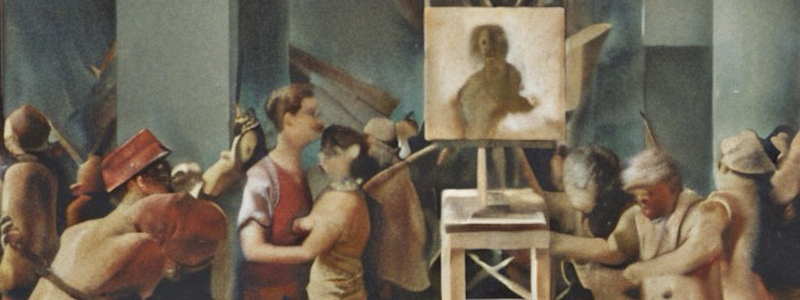
Talk: Werke ohne Schöpfer: Kunst, KI und das Urheberrecht
Im Rahmen der Reihe „Hinter den Bildern. Gespräche zu Kunst, Recht und Gesellschaft“
Derzeit macht generative KI im Wochentakt rasante Fortschritte, Systeme wie ChatGPT, Midjourney oder Suno bringen in Sekunden Bilder, Texte, Musik und Filme hervor. Während die KI-Schöpfungen selbst gemeinfrei sind, bedienen sich die Programme oft bei urheberrechtlich geschützten Werken. Diese Schieflage ist Stoff für heftige Konflikte zwischen Künstler:innen und Tech-Unternehmen und wirft die Frage auf, inwiefern das Urheberrecht die kreativen Leistungen Einzelner im KI-Zeitalter noch schützen kann. Der gerade in Kraft getretene „AI Act“, das weltweit erste Gesetz zur Regulierung von KI in der EU, spielt dabei eine wichtige Rolle und verändert die Situation. Stehen wir am Übergang in ein neues Zeitalter in der Kunst, in dem die menschliche Schöpfung hinter die technologische zurücktritt?
Darüber diskutiert Prof. Dr. Linda Kuschel, Juniorprofessorin für Bürgerliches Recht, Immaterialgüterrecht sowie Recht und Digitalisierung mit Julian van Dieken, Fotograf, Videoproduzent, Medienreferent und KI-Künstler und Julia Laatsch, Fotografin, Vorständin des Deutschen Fotorats und Beirätin des Berufsverbands FREELENS e.V.
Moderation: Ralf Schlüter, Kulturjournalist und Gründer der Agentur Kulturbotschaft
Eintritt frei. Anmeldung und weitere Informationen hier
Institution
- ZEIT-Stiftung Ebelin und Gerd Bucerius
The Digital Shift 4.0 - Hochschulverwaltungsdigitalisierung & OZG
Die digitale Transformation administrativer Prozesse ist für moderne Organisationen unerlässlich, um den Erwartungen der Stakeholder gerecht zu werden und gesetzliche Vorgaben zu erfüllen. Dennoch stehen viele Hochschulen vor Herausforderungen wie föderalen Strukturen, Ressourcenmangel und rechtlichen Unsicherheiten. Diese Online-Konferenz zielt darauf ab, Best Practices auszutauschen und ausgewählte Fachthemen zu präsentieren. Zudem fördert sie die bundesweite Vernetzung der Hochschulen. Die Veranstaltung richtet sich insbesondere an Digitalisierungs- und OZG-Koordinator:innen sowie Mitarbeitende aus den Hochschulverwaltungen und ist kostenfrei. Bitte beachten Sie, dass die Anmeldung zur Onlinekonferenz auf eine begrenzte Teilnehmendenzahl beschränkt ist. Wir empfehlen Ihnen daher, sich zeitnah anzumelden.
Institutions
- ZKI-Geschäftsstelle c/o Freie Universität Berlin

The Privacy Fallacy: Harm and Power in the Information Economy
Professor Ignacio Cofone, McGill University
The Hamburg Network for Artificial Intelligence and Law (NAIL) invites you to its next event. We are pleased to welcome Professor Ignacio Cofone from McGill University in Montreal, Canada. He presents his latest book in which he demonstrates why our legal system is unable to adequately protect our privacy in the reality of new data-driven technologies such as AI. The lecture is followed by a subsequent discussion on the topic. The event will be held in English.
The event will take place in person at the University of Hamburg, Faculty of Law, Rothenbaumchaussee 33, Room A125. No registration is required for this.
There is also the option of participating online. Please sign up by emailing nail@ile-hamburg.de.
Institutions
- Network for Artificial Intelligence and Law (NAIL)
Urheberrecht, KI und die Zukunft der Internetsuche
Philipp Hacker untersucht in seinem Vortrag die urheberrechtlichen Implikationen generativer KI für die Internetsuche anhand des EuGH-Verfahrens Like Company v. Google und der Entscheidung in Sachen GEMA gegen OpenAI des LG München I. Er zeigt, dass KI-Training regelmäßig als Vervielfältigung einzuordnen ist und häufig unter die Text- und Data-Mining-Ausnahme fällt, während KI-generierte Ausgaben journalistischer Inhalte eine öffentliche Wiedergabe darstellen können. Das Modell selbst rückt in das Zentrum der urheberrechtlichen Verantwortung. Diese Verantwortung liegt dabei primär bei den KI-Anbietern. Abschließend beleuchtet der Vortrag die Folgen für Pressefreiheit, Vergütungssysteme und die europäische Plattformregulierung.
Prof. Dr. Philipp Hacker, LL.M. (Yale), ist Inhaber des Lehrstuhls für Recht und Ethik der digitalen Gesellschaft an der European New School of Digital Studies (ENS) der Europa-Universität Viadrina Frankfurt (Oder). Derzeit konzentriert sich seine Forschung auf die Regulierung digitaler Technologien, insbesondere im Bereich der künstlichen Intelligenz. Philipp Hacker arbeitet häufig mit Informatiker*innen und Mathematiker*innen zusammen, insbesondere zu Fragen der erklärbaren KI, der algorithmischen Fairness und den Klimafolgen von KI. Für seine Arbeit erhielt er mehrere akademische Preise, darunter 2020 den Wissenschaftspreis der Deutschen Stiftung für Recht und Informatik. Er berät regelmäßig nationale und EU-Gesetzgeber, Regulierungsbehörden und die Industrie.
Diese Lecture findet hybrid statt. Es ist eine digitale Teilnahme via Zoom und eine Teilnahme in Präsenz möglich. Die Zugangsdaten für die digitale Teilnahme erhalten Sie nach Anmeldung am Veranstaltungstag per E-Mail.
Wo Suche und KI aufeinandertreffen – und Medien verstummen könnten
Welche Auswirkungen haben das Aufeinandertreffen von traditioneller Internetsuche und generativer künstlicher Intelligenz auf das Informations-Ökosystem? Diese Frage steht im Zentrum des 16. Hamburger Mediensymposiums, veranstaltet vom HBI sowie der Medienanstalt Hamburg/Schleswig-Holstein (MA HSH) und der Handelskammer Hamburg.
Die traditionelle Suche und generative künstliche Intelligenz (KI) verschmelzen von beiden Seiten. Durch sogenanntes Grounding – unter anderem auf der Basis von Medieninhalten – beantworten KI-Bots inzwischen Fragen, die Bürger*innen auch an Medien richten. Gleichzeitig integrieren Suchmaschinen zunehmend KI-Elemente in ihre Funktionsweise und die Ergebnispräsentation. Die Auswirkungen auf das Informations-Ökosystem sind beträchtlich und könnten mediale Angebote potenziell gefährden. Wir müssen sowohl die Architektur der Technologien als auch die unterschiedlichen Informationsbedürfnisse der Bürger*innen, die an diese Angebote herangetragen werden, besser verstehen.
Im Rahmen der Veranstaltung möchten wir die aufgeheizte Debatte mit kommunikationswissenschaftlichen sowie medienrechtlichen, regulatorischen und medienökonomischen Einordnungen versorgen und diese aus unterschiedlichen Praxisperspektiven diskutieren.

Universität Hamburg
Adeline Scharfenberg