ai regulation
Events
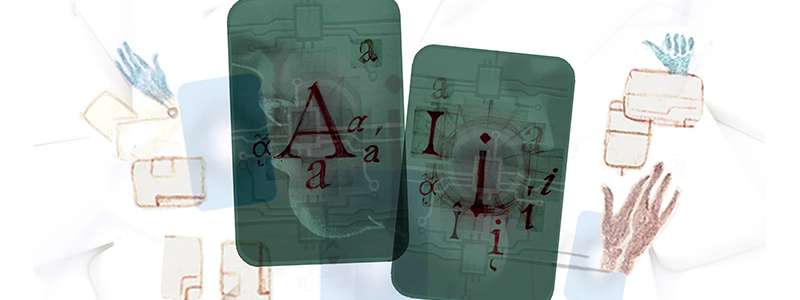
Public Lecture Series: Taming the Machines. The Future of Prediction. Algorithmic Forecast in Science and Society
This lecture series invites viewpoints from different relevant disciplines to explore how we can preserve and advance human values through the development and use of AI technologies. Key questions include: How does AI impact our fundamental social, political, and economic structures? What does it mean to lead a meaningful life in the AI age? What design and regulatory decisions should we make to ensure digital transformations are fair and sustainable?
Speaker: Prof. Dr. Elena Esposito, Universität Bielefeld, DE
Institutions
- UHH
Public Lecture Series: Taming the Machines. The Influence of AI on Democracy
Prof. Dr. Tilo Wesche, Carl von Ossietzky Universität Oldenburg, DE
Artificial intelligence is rapidly becoming a structuring force in contemporary life. From scientific research and public administration to everyday communication and self-understanding, AI systems shape how we act, decide, and relate to one another. Yet their rapid diffusion raises urgent philosophical and political questions: What kind of progress does AI promise and for whom? How do algorithmic systems transform responsibility, agency, and justice? Who is likely to suffer from the watchful eye of AI systems? Can democratic societies meaningfully govern technologies that increasingly govern them?
This semester of Taming the Machines explores these questions from interdisciplinary perspectives in philosophy, political theory, and science and technology studies. We invite you to reflect with us on AI as a site of power and normativity, and examine its role in economic and political ordering, surveillance and security, knowledge production, and the formation of subjectivity. And also to considers more intimate dimensions, such has how interactions with such systems might reshape self-knowledge, dialogue, creativity, and even solitude.
Institutions- UHH
Public Lecture Series: Taming the Machines. Thinking with the Everyday Oracle: What Generative AI Is Doing to Our Minds
The Philosophy, Ethics and Politics of AI
This semester, the Taming the Machines lecture series explores the sites and settings of digital transformations, addressing the foundations of AI, the entanglement of technology and science, as well as implications for our access to the world and to ourselves. It ranges from a furthered examination of algorithms and their societal effects to the manifold faces of digital capitalism and a critical theory of this digital constellation.
To get the latest updates and details how to attend the lectures, please visit http://uhh.de/inf-eit
- UHH
Public Lecture Series: Taming the Machines. Uneven Datafication: Political Economy of Digital Colonial Capitalism
Prof. Dr. Azadeh Akbari, Goethe-Universität Frankfurt, DE
This paper develops the concept of uneven datafication, drawing on literature on coloniality, uneven development, and dependency theory. Uneven datafication refers to uneven development in the contemporary political economy of data, showing how global cycles of differentiation and totalisation perpetuate inequality to sustain capitalist structures. Datafication is neither homogeneous nor universal, but marked by colonial continuities, spatial differentiation, and temporal unevenness. Uneven datafication operates through three interrelated dynamics. First, territorialisation, deterritorialisation, and reterritorialisation produce uneven geographies of digital colonial capitalism, from datafied bodies to platform infrastructures and space-based data centres. Second, dispossession enacts spatial, temporal, and dehumanising violence, ranking populations as more or less valuable and enforcing biopower ‘within’ and necropower ‘beyond’. Third, unequal exchange sustains asymmetrical valuation and circulation of data and data labour, enabling Big Tech and core economies to extract surplus value from peripheral regions.
Uneven datafication thus sustains colonial capitalist accumulation through differentiated dispossession and dependency across populations, spaces, and classes.
- UHH
Public Lecture Series: Taming the Machines. What, if anything, are convivial technologies?
Prof. Dr. Darian Meacham (Maastricht University, NL)
This talk will focus on how this distinction between convivial and monopolistic (or non-convivial) technologies can support a critical phenomenology of technology. I will argue that Gorz attempts to do just this, but that his development of the “convivial – un-convivial” distinction in terms of a broader account of “autonomy” vs “heteronomy” would benefit from a more phenomenologically grounded account of autonomy. I will pose (and try to address) the question of whether a more embodied account of autonomy, such as developed within the context of enactive approaches to cognition would serve such an aim.
A third step will be to ask if and how an enactively enriched notion of autonomy, when situated within the critique of technology and economic rationality, can contribute to the development of programmes for “concrete utopias”.
Institutions
- UHH

Universität Hamburg
Adeline Scharfenberg